
| Patriotism in December: Honoring Historical Milestones December has always been a significant month in American history. It is a month where we reflect on moments that have shaped our nation and honor the spirit of patriotism that binds us together. Here are a few key events that highlight the importance of December in the American historical landscape. The Boston Tea Party–On December 16, 1773, American colonists, frustrated by British taxation without representation, took a stand in what would become one of the most famous acts of defiance in our history—the Boston Tea Party. Disguised as Mohawk Indians, the patriots boarded three British ships in Boston Harbor and dumped 342 chests of tea into the water. This bold move sparked a series of events leading to the American Revolution, ultimately paving the way for the birth of a new nation founded on liberty and justice. The Bill of Rights–December 15, 1791, marks the ratification of the Bill of Rights—the first ten amendments to the United States Constitution. These amendments were designed to protect individual liberties and ensure justice for all citizens. The freedoms of speech, religion, press, assembly, and petition, along with the rights to a fair trial and protection from unreasonable searches and seizures, are enshrined in this pivotal document. The Bill of Rights is a testament to the enduring values that define America and guide our democracy. The Wright Brothers’ First Flight–On December 17, 1903, Orville and Wilbur Wright achieved the first powered, controlled, and sustained flight in human history at Kitty Hawk, North Carolina. This monumental achievement marked the dawn of aviation and forever changed the way we connect with the world. The Wright brothers’ ingenuity and perseverance embody the American spirit of innovation and exploration, inspiring generations to reach for the skies. Pearl Harbor–December 7, 1941, is a day that lives in infamy. The surprise attack on Pearl Harbor by Japanese forces propelled the United States into World War II. It was a moment that united the nation in defense of freedom and democracy. The bravery and sacrifice of the men and women who served during this pivotal time in our history remind us of the cost of liberty and the importance of standing strong in the face of adversity. Apollo 17–On December 7, 1972, Apollo 17 launched, marking the last manned mission to the moon. Astronauts Eugene Cernan, Harrison Schmitt, and Ronald Evans embarked on a journey that expanded our understanding of the lunar surface and our place in the universe. The success of the Apollo missions showcases the heights we can achieve when we dare to dream and work together towards a common goal. Conclusion–December is a month rich in history and patriotism. From acts of defiance that sparked a revolution to achievements that took us to the stars, these events are a testament to the enduring spirit of America. As we remember these milestones, let us also look forward to the future with the same courage, determination, and hope that have always defined our nation. |
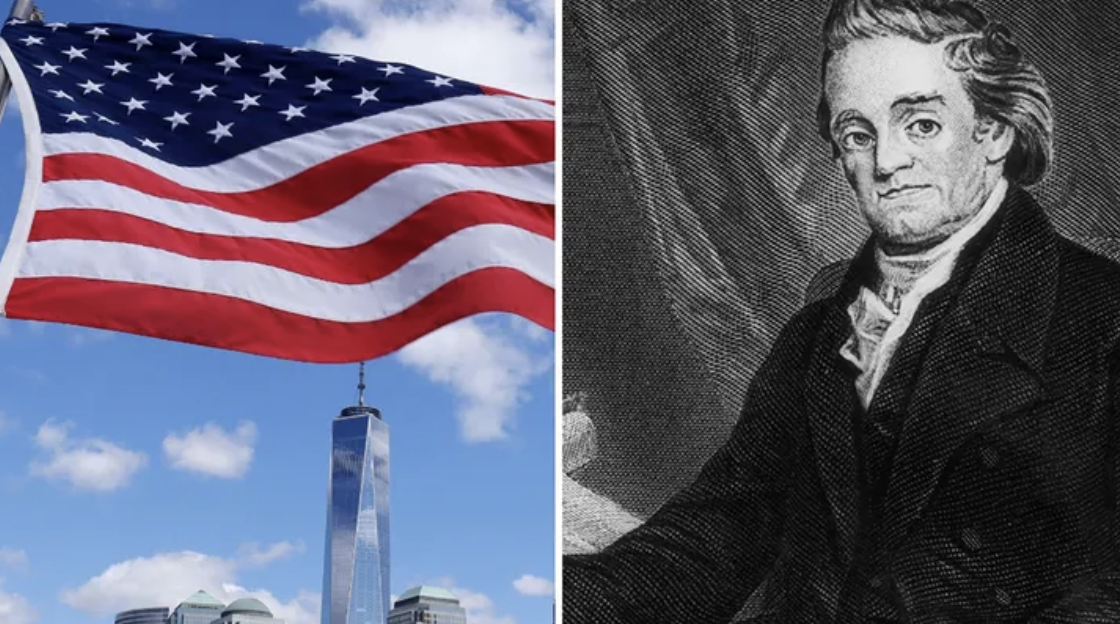
| Noah Webster, right, helped shape the destiny of our powerful new nation with language. (Gary Hershorn/Getty Images; Archive Photos/Getty Images) Meet the American who defined a new national identity, Noah Webster, New England patriot armed with the pen’Schoolmaster of the Republic’ documented 12,000 new American words, taught children to spell for 100 years By Kerry J. Byrne Fox News |
Noah Webster was the patriot armed with a pen. He defined 12,000 new words in the wake of the American Revolution, using language to establish a new national identity. Noah Webster fought for American independence with words, not swords.His mighty pen defined the identity of a sprawling, proud and ambitious new United States. The New England native’s impact on our national heritage proved far greater than just the American-English dictionary that still bears his name. “Webster was very much in the truest sense of the word a patriotic American,” Peter Sokolowski, “dictionary ambassador” and editor at large for Merriam-Webster, based in Massachusetts, told Fox News Digital. “He believed the new political America also needed a new cultural America, that there had to be cultural identity as distinct from Britain as our new political identity was distinct from Britain.”Webster was an outspoken advocate of American independence. The lexicographer was pen pals with Founding Fathers John Adams, Ben Franklin, Alexander Hamilton and the new nation’s greatest swordsman, George Washington. Webster has been dubbed “The Forgotten Founding Father,” most notably in the 2012 biography of that name by Joshua Kendall. “Webster was very much in the truest sense of the word a patriotic American.”He was also known as “The Schoolmaster of the Republic” — a testament to the remarkable success of his spelling book, ubiquitous in American schoolrooms throughout the 19th century. Webster ensured that a nation, now 340 million strong and rooted in almost every language on the planet, has a common way to communicate. American English has proven to be a powerful force uniting the world’s most dynamic and diverse immigrant nation. The word “immigrant” was actually one of the 12,000 new words first used by Americans — and first defined by Webster. “Now is the time, and this [is] the country,” Webster wrote in 1789 in his “Dissertations on the English Language,” dubbed America’s linguistic Declaration of Independence. “Let us then seize the present moment, and establish a national language, as well as a national government.” Noah Webster Jr. was born on Oct. 16, 1758, in what’s now West Hartford, Connecticut. Noah Webster Sr. was a farmer and descendant of John Webster, an Englishman who became one of the first settlers of Hartford in 1636. The younger Webster apparently had little appetite for farm life. “I wish to enjoy life, but books and writing will ever be my principal pleasure,” Webster wrote years later in a letter to George Washington. “I must write; it is a happiness I cannot sacrifice.” Webster was a teenager when the American Revolution began. He spent much of the war years as a student at Yale in New Haven, Connecticut. The bookish boy proved willing to sacrifice all for the cause of independence. British forces marched south through New York in the summer of 1777, leaving a path of “terror and devastation,” according to period reports.Webster Sr. was the captain of the local militia and gathered his men to meet the British forces. Webster Jr. joined the 60-mile march. The British were defeated and turned back by colonial troops led by fellow Connecticut native, and, at the time still-American hero, Benedict Arnold, before the West Hartford group could join the fight. “The little band of militia men from the West Division of Hartford … were most willing to fight and die for their country.” “The little band of militia men from the West Division of Hartford returned home without firing a shot, but were most willing to fight and die for their country,” Jeffrey Mainville, executive director of the Noah Webster House, told Fox News Digital via email. Webster’s prolific pen began shaping the new nation with his “Sketches of American Policy,” written in 1785. “Virtually every educated man in America who participated in the affairs of government read Webster’s Sketches,” Harlow Giles Unger wrote in his biography, “Noah Webster: The Life and Times of an American Patriot.” Webster made his biggest impact on the new nation, however, in the schoolroom with his spectacularly successful textbook, commonly known as the “Blue-Backed Speller,” first published in 1783. The schoolbook “taught children how to read, write, spell and pronounce words for over 100 years,” says the National Museum of Language in College Park, Maryland. The “Blue-Backed Speller” was, by many reports, the bestselling book in America of the 19th century, after The Bible, with estimates of total sales as high as 100 million copies. The windfall from the textbook afforded Webster the opportunity to pursue his true passion: defining the language of the new nation. Webster’s collection of words expanded with the breathless expansion of the new United States. The “Blue-Backed Speller” was published in the same year that the British crown recognized American Independence with the Treaty of Paris in 1783. Webster began exercising his power to define the national lexicon with his “Compendious Dictionary of the American Language.” It expanded American English with 5,000 new words and was published in 1806 — the same year that Lewis & Clark returned from expanding the nation’s sense of identity all the way to the Pacific Coast. Among new American words defined for the first time by Webster: “skunk,” “chowder” and, most profoundly, “immigrant.” “He was on top of the word ‘immigrant’ almost from the get-go.” “Immigrate” existed as a verb. But it was first used as a noun in spoken American English vernacular in 1789, according to “dictionary ambassador” Sokolowski. Webster defined “immigrant” as “one who removes into a country.” “He was on top of the word ‘immigrant’ almost from the get-go,” said Sokowlski, marveling at the speed at which Webster discovered, defined and published the new word with limited technology. “He collected words the way all the lexicographers did,” said Sokolowski. “He used little slips of paper.” With that rudimentary system, Webster published his staggering landmark “American Dictionary of the English Language” in 1828. It spelled and defined 70,000 words, 12,000 of which had never appeared in British English dictionaries — further distancing the new nation from its former colonial master. Webster was singularly responsible for many of the differences between British English and American English spellings today: colour became color; analyse became analyze; and defence became defense, among other notable examples. Brits travelled — but Americans traveled. Yet Americans don’t travel too far today to find proof of their distinct form of English. Canada still uses traditional British spellings of words that America changed 200 or more years ago, despite the two nations sharing common pop culture, pro sports and a 5,525-mile border. “We had a revolution, and they didn’t,” Joseph Janes, an associate professor at the University of Washington Information School in Seattle, told Fox News Digital. He added, “Webster feels very deeply about America as a concept and as a country distinct from everywhere else.”Webster added his last words to the dictionary in 1841, at 82 years old. Among the newcomers that year: feminism and terrorism. Feminism was essentially a synonym for feminine, notes Sokolowski — while terrorism referred specifically to the horrors of the French Revolution.
Noah Webster died on May 28, 1843. He was 84 years old. His legacy is best kept today at the Noah Webster House in West Hartford, a saltbox-style colonial where the educator was born and raised. It’s now a National Historic Landmark and open to the public. “He had no real ability to look this far and see what America would become,” Noah Webster House executive director Jeffrey Mainville told Fox News Digital. “But the fact is that he took a path to document a truly American language and culture.” The Noah Webster House celebrates its patriotic son with an online game show each spring called “Webster’s War of the Words.” The landmark works with the American Legion to distribute Webster’s dictionary to local schoolchildren today. Blue Back Square in West Hartford is a popular retail and residential development in West Hartford, the name a nod to Webster’s influential spelling primer. Webster’s other achievements are almost too numerous to mention. He was tapped by Alexander Hamilton to edit his Federalist newspaper in New York City in the 1790s and served in the Connecticut House of Representatives in the early 1800s. Webster moved to Amherst, Massachusetts in 1815, helping to found Amherst College six years later. He helped establish intellectual property law with the U.S. Copyright Act of 1831. The rights to his dictionary were purchased by brothers George and Charles Merriam after Webster’s death. The Merriam-Webster Dictionary is published today in Springfield, Massachusetts, just 30 miles from where America’s patriot with a pen was born and where he began capturing the language of the ambitious new nation. “Let us then seize the present moment, and establish a national language, as well as a national government.” The Merriam-Webster archives house a remarkable treasure trove of collected knowledge, said Sokolowski. There are 16 million slips of paper with individual words, some of which date back to Webster’s original 18th-century curiosity and research. “This country must, in some future time,” Webster wrote in 1783, “be as distinguished by the superiority of her literary improvements as she is already by the liberality of her civil
and ecclesiastical constitutions.”
September 2024 Americanism

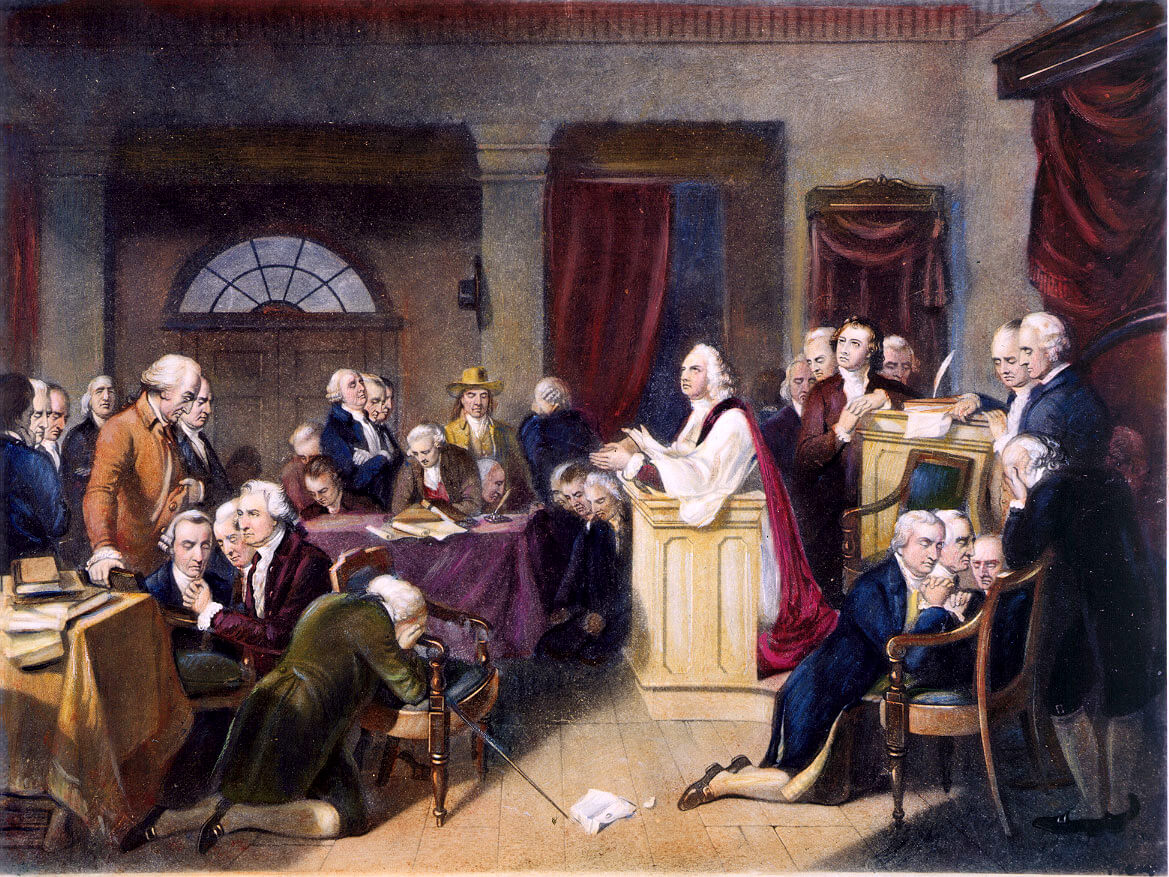
| THIS DAY IN HISTORY–America’s First Contintental Congress |
On September 5, 1774, the First Continental Congress met at Carpenters’ Hall in Philadelphia. Among the delegates who attended were George Washington, Patrick Henry, Samuel Adams, John Adams, John Jay, and many other notables. This meeting was important since it was the first time the colonies united on a large scale (though one colony was not represented), thus the tone it set would be crucial for America’s future. The congress had been called to address increasing British tyranny, including the Intolerable Acts, which had ended self-government in Massachusetts and shut down the port of Boston
to commercial shipments. On the second day of the gathering, Congress got down to business. There was a call to open the meeting with prayer, but some delegates doubted they could pray together since there were different denominations present. Samuel Adams ended the debate when he announced that he was not a bigot and could “hear a prayer” from anyone “who was at the same time a friend to his country.” He then nominated Rev. Jacob Duché to conduct the prayers. It was amidst all these circumstances that on the third day, September 7th, the Rev. Duché led the first prayer in Congress. Delegate Silas Deane reported Duché prayed for a full ten minutes and then read the Scripture for the day. John Adams related to his wife how much this time of prayer meant for the attendees: [Rev. Duché read several prayers in the established form, and then read the collect for the seventh day of September, which was the thirty-fifth Psalm. You must remember, this was the next morning after we heard the horrible rumor of the cannonade of Boston. I never saw a greater effect upon an audience. It seemed as if Heaven had ordained that Psalm to be read on that morning. That time of prayer united the delegates despite their differences. In fact, Daniel Webster, “Defender of the Constitution,” later reminded the US Supreme Court of the unifying power of prayer: Mr. Duché read the Episcopal service of the Church of England and then, as if moved by the occasion, he broke out into extemporaneous prayer. And those men who were then about to resort to force to obtain their rights, were moved to tears; and flood of tears, Mr. Adams says, ran down the cheeks of the pacific Quakers who formed part of the most interesting assembly. Depend upon it, where there is a spirit of Christianity, there is a spirit which rises above form, above forms, independent of sect or creed, and the controversies of clashing doctrines. It was prayer and the Scriptures that united the Founding Fathers, and they can still unite us today.

August 2024 Americanism

The Young and the Restless
I’m sure many of you watched the campus protests this week flare up across the country as college students and non-college students held pro-Hamas/anti-Israel rallies and, of course, desecrated the American flag in the process! While this didn’t exactly shock me what did give me a wonderful surprise was the amount of pushback these protesters got from patriotic students on those same campuses. The “frat bros” at Ole Miss, Alabama and LSU and individual students at other campuses not only shouted down the protesters with the chant, “U-S-A, U-S-A, U-S-A….” but stood at the base of the flag poles and protected the flag from being ripped down again after it had initially been replaced with the Palestinian flag. Take a look for yourself- Protestors
Further, a student who held up her own American flag at the University of North Carolina at Chapel Hill’s Tuesday, after an anti-Israel mob desecrated an American flag flying on campus, said she would die for Old Glory. Anti-Israel protesters targeted the American flag on the campus — which had been flying at half-mast after four Charlotte officers were killed in the line of duty. At one point, they replaced it with a Palestinian flag – enraging students and inspiring members from the
Pi Kappa Phi fraternity to take action.
“I definitely was emotionally a little bit shaken,” said UNC student named Hailey, whose last name is being withheld for security reasons. “I was like, I cannot believe my eyes that we as a country are at a place where the American flag is being replaced by Palestinian flag. I was just in shock.”
Until the flag was restored, Hailey and another student held up another American flag – so that there was always one waving on the campus quad despite the attempts from anti-Israel agitators
to remove the symbol.
“I stood… holding an American flag as they were taking it down. It was the most shocking thing I think I have ever seen in my life,” she said. “I just felt so patriotic. I felt so proud of my country and proud of the Americans who are standing beside me, who are holding the flag with me, who are willing to stand out and protect it. And like, I would give my life to protect that flag. I would give my life to protect America in a heartbeat.
And. I was willing to do that that day.”
Facing down the mob of agitators, the student said, “I was kind of afraid. Like my heart was beating really fast. My hands were shaking a little bit. And I was definitely nervous.”
Already, these students are displaying the courage and love of country like those of Nathan Hale, Alexander Hamilton and James Monroe. Hale was 21-years old when he was captured and hung as a spy; Hamilton and Monroe were only 21 and 25-years-old respectively, when each signed the
Declaration of Independence in 1776.
This weekend wraps up the first ever state convention of the Arizona Chapter of the Young Republicans (YRs). It’s an organization that has been in existence for 93 years! The first YR club was established in 1856 in support of the newly formed Republican Party and the abolitionist movement but it wasn’t until 1931 that they organized nationally due to the efforts West Point graduate George H. Olmsted. President Herbert Hoover took notice of the young man and asked him to be the first leader of this new division of the Republican Party.
The Teenage Republicans (TARs) website boasts, “The Life of the Party” And what could be more true? They are one of the three official auxiliaries of the Republican Party; the other two being College Republicans and Young Republicans but are focused on high school aged students.
Check them out-https://teenagerepublicans.org/
College Republican National Committee (CRNC) s was founded in 1982 and is one of the nation’s largest, longest-running and most active youth political organizations. It consists of 52 Federations across the US, Puerto Rico and the District of Columbia. They have over 250,000 members nationwide and are on nearly 2,000 campuses.
Let us pray that these young patriots continue to uphold the values of our country and that you support these organizations that encourage them to do so.
March 2024 Americanism
In 2018, Congressman Johnson (now Speaker of the House) drafted this short summary of the central beliefs of American conservatives to help anchor the work of the Republican Study Committee in the timeless principles that made our nation the freest, strongest, and most prosperous in human history. Since that time, many other conservative organizations and lawmaking bodies nationwide have adopted this list as their own.

February Americanism
submitted by Chair Nancy Osgood
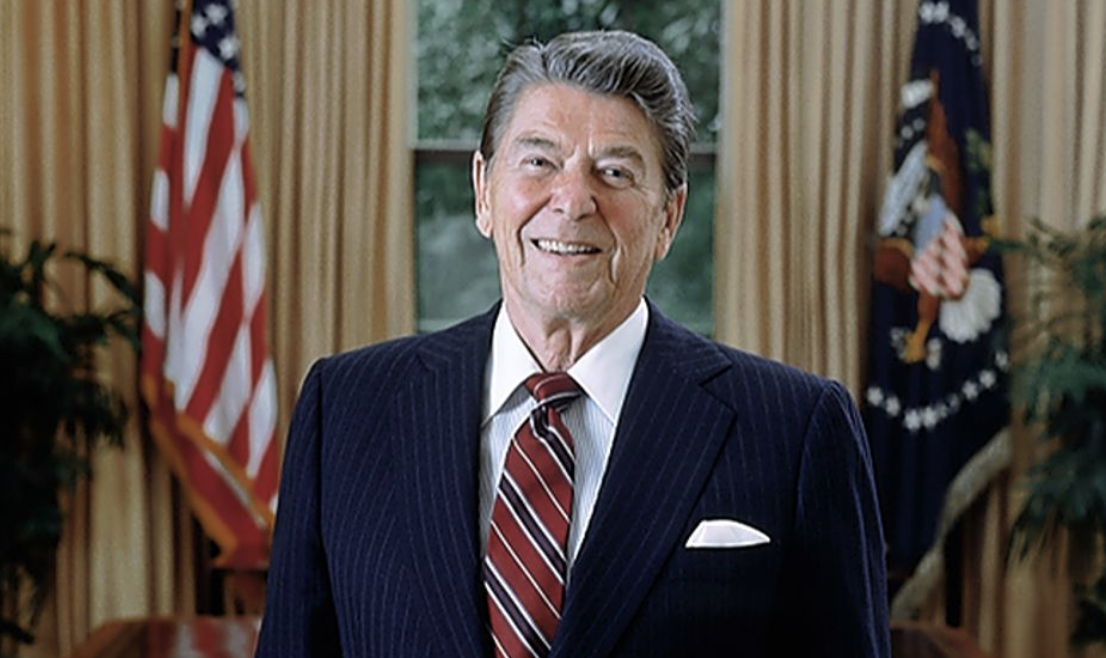
Honoring the Life and Presidency of Ronald Reagan
February 6th commemorates the birthday of our 40th president of the United States, Ronald Reagan. Born in 1911 in Tampico, Illinois he is considered one of the most prominent conservative figures in American history. On January 20, 1981, Reagan took office. Only 69 days later he was shot by a would-be assassin, but quickly recovered and returned to duty. His grace and wit during the dangerous incident caused his popularity to soar.
Dealing skillfully with Congress, Reagan obtained legislation to stimulate economic growth, curb inflation, increase employment, and strengthen national defense. He embarked upon a course of cutting taxes and Government expenditures, refusing to deviate from it when the strengthening of defense forces led to a large deficit.
A renewal of national self-confidence by 1984 helped Reagan and Bush win a second term with an unprecedented number of electoral votes. Their victory turned away Democratic challengers Walter F. Mondale and Geraldine Ferraro.
In 1986 Reagan obtained an overhaul of the income tax code, which eliminated many deductions and exempted millions of people with low incomes. At the end of his administration, the Nation was enjoying its longest recorded period of peacetime prosperity without recession or depression.
In foreign policy, Reagan sought to achieve “peace through strength.” During his two terms he increased defense spending 35 percent, but sought to improve relations with the Soviet Union. In dramatic meetings with Soviet leader Mikhail Gorbachev, he negotiated a treaty that would eliminate intermediate-range nuclear missiles. Reagan declared war against international terrorism, sending American bombers against Libya after evidence came out that Libya was involved in an attack on American soldiers in a West Berlin nightclub.
By ordering naval escorts in the Persian Gulf, he maintained the free flow of oil during the Iran-Iraq war. In keeping with the Reagan Doctrine, he gave support to anti-Communist insurgencies in Central America, Asia, and Africa.
Overall, the Reagan years saw a restoration of prosperity, and the goal of peace through strength seemed to be within grasp. Listen in to some of the many memorable quotes from him that undoubtedly ring true today more than ever:
“I wonder what the Ten Commandments would have looked like if Moses had run them through the US Congress.”
“The trouble with our Liberal friends is not that they’re ignorant; it’s just that they know so much that isn’t so.”
“We must reject the idea that every time a law’s broken, society is guilty rather than the lawbreaker. It is time to restore the American precept that each individual is accountable for his actions.”
“Government’s first duty is to protect the people,
not run their lives.”
“We are never defeated unless we give up on God.”
“Status quo, you know, is Latin for the mess we’re in.”
“Facts are stubborn things.”
“Republicans believe every day is the Fourth of July, but the democrats believe every day is April 15.”
“It has been said that politics is the second oldest profession. I have learned that it bears a striking resemblance to the first.”
January Americanism–Gear Up for 2024!
submitted by Chair Nancy Osgood
AMERICANISM – January 2024
Happy New Year! And yes, it’s an election year to boot! I can’t believe it and honestly, there’s something about that reality I find exhausting. I have moments where I catch myself wondering if I have the strength to again take on the battle ahead of me. But then I remember that the stakes are too high not to fight. As we know, at the very core is the battle for our country-Americanism-the values, beliefs, traditions and customs that have made this country the greatest nation on earth. It upholds the belief that every individual possesses God-given inalienable rights and freedoms, ensuring equality under the law and the opportunity for all to pursue their aspirations. The left would tell us it’s not the greatest nation on earth (Michelle Obama, Andrew Cuomo, Ibraim X. Kendi, to name a few) though they or anyone else who holds this opinion has yet to explain the hypocrisy that finds millions of illegals coming here every year in search of a better life.
2024 gives us the opportunity to “gear up for victory” according to our new NFRW president, Julie Harris. This is probably the most important election of our lifetime and we must renew our commitment to win back the White House and Senate. Here are my weapons for battle this year:
1. Remind myself daily of scripture, especially the following:
Finally, be strong in the Lord and in his mighty power. Put on the full armor of God, so that you can take your stand
against the devil’s schemes.
Ephesians 10-11.
I can do all this through him who gives me strength.
Philippians 4:13
And those he predestined, he also called; those he called, he also justified; those he justified, he also glorified. What, then, shall we say in response to these things? If God is for us, who can be against us? He who did not spare his own Son, but gave him up for us all—how will he not also, along with him,
graciously give us all things?
Romans 8:30-32
George Washington himself said in his First Inaugural Address in 1789, “It would be peculiarly improper to omit in this first official Act, my fervent supplications to that Almighty Being who rules over the Universe, who presides in the Councils of Nations, and whose providential aids can supply every human defect, that his benediction may consecrate to the liberties and happiness of the People of the United States.”
2. And speaking of George Washington, remember the he rescued the nation three times: first by leading the Continental Army to victory in the Revolutionary War, second by presiding over the Constitutional Convention that set the blueprint for the United States and ushering the Constitution through a fractious ratification process, and third by leading the nation as its first president. There is no doubt that the struggling new nation needed to be rescued—and that Washington was the only American who could bring them together.
3. Keep focused. Get involved. Get trained. There are so many great training opportunities held at AZ Free Enterprise and EZAZ.org. Use the Request to Speak (RTS) system through the AZ State Legislature and have your voice heard. It makes a difference! Attend TRW meetings, attend your local school board meetings and go to the state capital when in session.
Keep informed.
4. Read God Calls Us to Do Hard Things by US Senator Katie Boyd Britt and Rescuing the Constitution by Brett Baier. I love biographies and need the great examples of others who have fought hard and continue to fight for this county.
There is strength in numbers. Let us stick together and work together. And let us not grow weary of doing good, for in due season we will reap, if we do not give up.
Galatians 6:9
Truth will ultimately prevail where pains is [sic] taken
to bring it to light.”
–George Washington
“During times of universal deceit, telling the truth becomes a revolutionary act.”
–George Orwell
December 2023
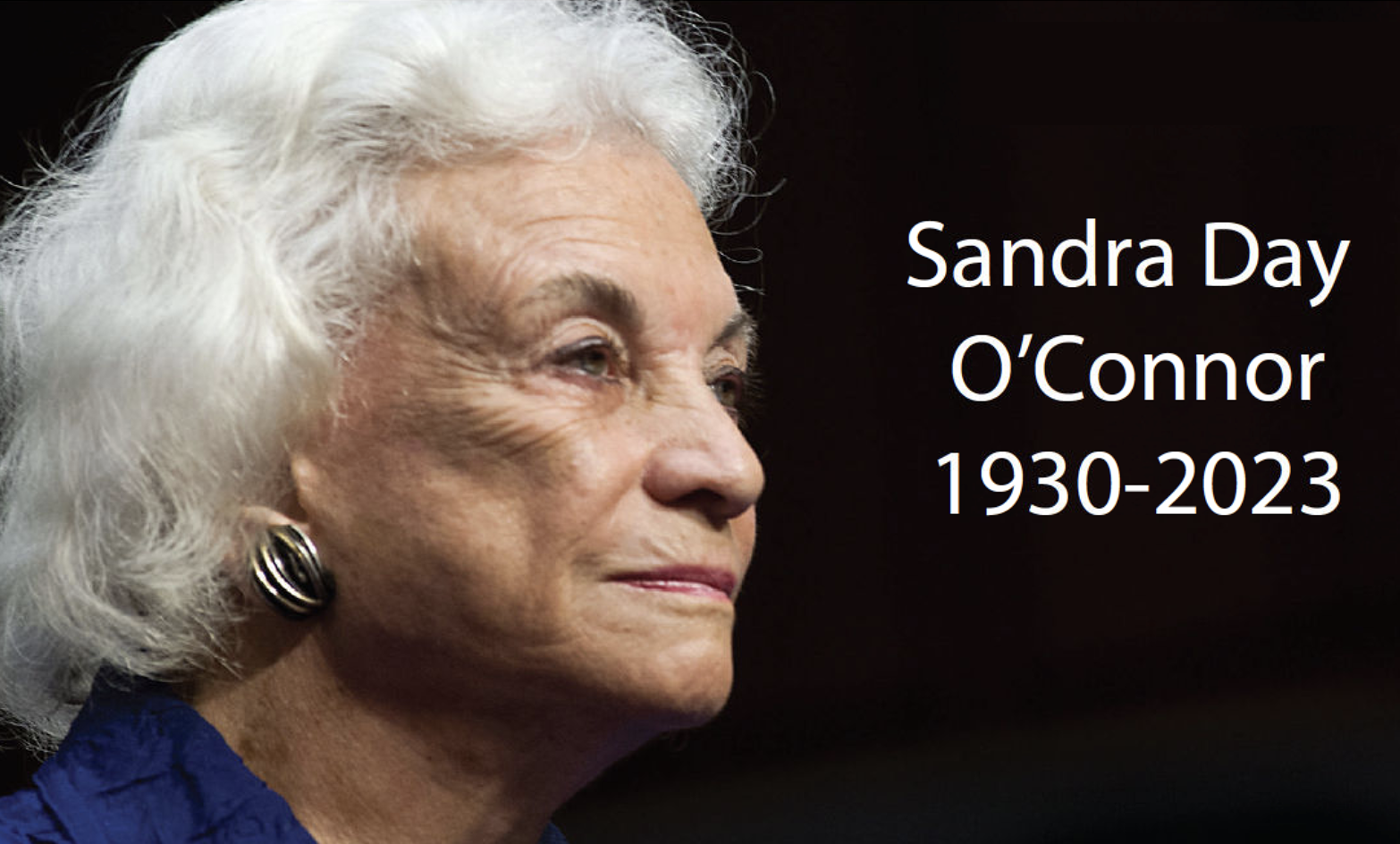
Remembering Sandra Day O’Connor
1930-2023
Sandra Day O’Connor, the first woman appointed to the Supreme Court and its most powerful justice for much of her tenure, died Friday at age 93. O’Connor, who retired in 2006 after nearly 25 years on the court, died in Phoenix of complications related to advanced dementia and a respiratory illness, the court said in an announcement. Not only was she the first female Supreme Court Justice but Sandra Day O’Connor was also the first female elected as state Senate Majority Leader in any state. “A daughter of the American Southwest, Sandra Day O’Connor blazed an historic trail as our Nation’s first female Justice,” Chief Justice John Roberts said in a statement. “She met that challenge with undaunted determination, indisputable ability, and engaging candor.” Justice O’Connor was an Arizona state judge in 1981 when Republican President Ronald Reagan, fulfilling a campaign pledge to break the male monopoly on the high court, selected her to succeed retired Justice Potter Stewart.
Watch this video click of Kimberly Yee
talking about the late Justice.
https://www.fox10phoenix.com/video/1375504
November 2023 Americanism
submitted by Nancy Osgood, Chair
10 ‘America first’ ways Congress can stand with Israel
DANIEL HOROWITZ
OCTOBER 31, 2023
“America first” and “pro-Israel” policies are one and the same because of our shared enemies, shared goals, and shared desire to protect our respective
countries from jihad.
Not only did Islamic jihadists brutally torture and massacre at least 1,400 Jews in Israel, but now Muslims and far leftists in every Western country are rampaging through the streets demanding more Jewish blood. So it’s understandable that Republicans would want to act upon their innate sympathy for Israel by sending them more money and weapons.
From a fiscal policy standpoint, however, that might not be so wise. America is broke and getting broker by the day. Knowing that, Congress should explore other options to aid Israel that put Americans first, unshackle Israel’s military from Joe Biden’s handcuffs, and protect Jews living in America from growing anti-Semitism and pro-Hamas sentiment.
Biden wants to send an additional $14.5 billion to Israel. It’s a trap Republicans would do well to avoid. Instead, they should defund Biden’s policies that buoy Israel’s enemies. Merely throwing more money at Israel without setting priorities would perpetuate the idea that other countries have first dibs on our debt-ridden treasury. That needs to change.
Here are 10 ways Congress could put America first, foster a minimalist approach in the Middle East, and free up Israel to do what it needs to protect itself.
1) Defund the Palestinians: What is the point of funding Israel if we are simultaneously funding those who seek its destruction? Biden has been sending several hundred million dollars a year to the Palestinian Authority, which has praised the Hamas attacks on Israel. Biden is also sending $100 million in “humanitarian aid” to Hamas fighters in Gaza. Finally, we funnel several hundred million every year through the United Nations Relief and Works Agency for Palestine Refugees, which has funded Hamas’s war machine for years. Republicans should end this funding immediately and pass the existing state-foreign ops appropriations bill that already includes a provision to defund the UNRWA.
2) No more U.S. troops in the Middle East: Biden has already sent hundreds of U.S. troops to Israel, in addition to the 4,000 or so we already have stationed in Iraq and Syria. Those troops are on hand to help impose a ceasefire. Moreover, the idea of having soldiers in Iraq and Syria is intellectually dyslexic. They are in-theater to protect Hezbollah and other Iranian assets from the Sunni insurgency. Yet while our soldiers are protecting Iranian assets, those very same Shiite proxies are attacking our troops. Various Shiite militias have launched at least 25 drone strikes against our bases over the past two weeks.
Our presence in these countries not only helps Iran, but it hinders Israel from attacking Hezbollah. Our government, ironically, is hamstringing Israel because we don’t want to raise the temperature of “the Arab street” in Iraq while we have troops on the ground. But we shouldn’t be in Iraq anyway. Pulling troops out of Iraq and Syria would put Americans first and give Israel a freer hand in dealing with Hezbollah. Finally, if House Republicans block funding for our Iranian protection racket, it would place Iran on the hook for the Sunni insurgency with the understanding that we won’t continue to bail Iran out.
3) Treat Iraq like the enemy it is: We continue to fund, train, and equip pro-Iranian Shiite militias in Iraq with ties to Israel’s mortal enemies. We also built a $1 billion embassy we are now forced to protect under precarious circumstances simply to obfuscate the fact that our 20-year “investment” there was a colossal failure. Not only did it fail, but we turned Iraq into an Iranian proxy, giving the mullahs Shiite hegemony from Tehran to the Mediterranean Sea. It’s well past time to defund our entire diplomatic and military engagement of the Iraqi regime.
4) Defund the Iran deal: Thanks to the Wall Street Journal, we now know that the Iranian government not only funded and directed the attacks but physically trained Hamas in Iran. Again, we need not spend billions of dollars and put boots on the ground; we merely need to exercise soft power and make the right alliances. That means undermining Biden’s alliance with Iran, which begins by prohibiting any funding for the implementation of the Iran deal.
5) Defund the Lebanese Armed Forces: Israel’s greatest threat is from Hezbollah on its northern border. We have helped fund and equip Hezbollah with weapons and counterintelligence that is used against Israel and might have been responsible for blinding Israel’s intelligence to the last month’s attacks. It is absurd to give Israel a blank check while funding its biggest enemy. Republicans must immediately prohibit all funding for Lebanon in the defense and state-foreign ops appropriations bills.
6) Stop funding two-state solution diplomacy: So much of our diplomatic infrastructure for 30 years has been geared toward a “two-state solution,” which is nothing more than the final solution for Israel that has given it Auschwitz borders. Congressional Republicans should prohibit all funding for diplomatic missions and programs related to this goal and instead direct funding toward the goal of resettling Arabs living in the Holy Land to other Islamic countries.
The same provisions in the appropriations bill funding the State Department should also prohibit the Biden administration from interfering in Israel’s internal affairs. Even after the massacre, Secretary of State Antony Blinken met with “Brothers in Arms,” Israel’s equivalent of Antifa, in the hopes of toppling Netanyahu and imposing the two-state solution. Enough!
7) Countermand Biden’s alliance with Qatar: Qatar is perhaps more directly responsible for the October 7 attacks than Iran. The country houses all of the Hamas leaders and funds Hamas, Hezbollah, and the Taliban. Yet the Biden administration conferred upon the wealthy terror-financing country the status of “a major non-NATO ally” — the same designation we have conferred upon Israel.
Incredibly, the Biden administration has not demanded that Qatar hand over Hamas’ leaders, which would go a long way toward disrupting Hamas and potentially short-circuiting a wider war. Congressional Republicans should move to end this alliance and push to relocate CENTCOM out of Qatar. A more reliable ally such as the United Arab Emirates would be more than happy to house our forces, which should be reduced anyway.
8) Shut our own border: Ending aid to our enemies in the Middle East frees up needed resources to focus on our own border. We know that thousands of people are crossing the southern border illegally every day. How many of them are Hamas and Hezbollah operatives? Republicans should not only attach H.R. 2 (banning catch-and-release) to the homeland security appropriations bill, but they should also include a provision allowing states to deport foreign nationals who are here illegally or who are subverting our culture by promoting Hamas.
9) Cancel visas from terror-supporting countries: Quite apart from the Jews of Israel facing deadly attacks, American Jews are at heightened risk in their own country from rampaging pro-Hamas demonstrators who threaten them with rape and murder. Ultimately, this is a problem for all of us. Republicans need to unite behind a moratorium on immigration and visas from terror-supporting nations, so that we have one refuge in this world for people to feel safe from the jihad Israel is now fighting.
10) Bar terror-supporting countries like Iran, Iraq, Turkey, and Qatar from funding religion and education on our soil: An American of the Muslim faith has the right to practice his religion unfettered by government. He also has the right to hate Jews. But an Islamofascist foreign government has no right to fund either mosques or educational institutions on our shores. So much of the hate that is being taught in mosques and in colleges is funded by the Muslim Brotherhood through Turkey or the Qatar Foundation. The mother’s milk of hate and subversion must be cut off, and we should not have enemy nations funding culture here at home.
In many respects, U.S. policy toward Israel is similar to domestic health care policy. We have destroyed the free market in health care for decades, thereby making costs unaffordable for consumers and thus engendering a need for trillion-dollar programs.
Likewise, Israel’s security problems are the result of three decades’ worth of counterproductive U.S. policy, troop placement, ill-conceived strategic alliances, and legitimizing Israel’s enemies. These policies crystallized under the Biden administration, which has literally allied with Iran.
Israel might have a need for some weapons, especially after we raided the stockpile to arm Ukraine’s military, including the rabidly anti-Semitic Azov Brigades. But for now, House Republicans should feel a greater sense of urgency to reverse the Biden policies that have endangered Israel’s security. Sending Israel some money and weapons but then handcuffing it will only bankrupt us further and accomplish nothing.
The Biden administration, which is saturated with Iranian spies, has no problem throwing money at Israel, which will enrich defense contractors but also be used to blackmail Israel into strategic retreat. Conservatives should not fall into the trap of giving Biden anything he wants in order to get aid to Israel. It would be akin to throwing money at the border under current policies, which will only foster more efficient catch-and-release.
Republicans should instead draw a red line around the IRS spending cuts to pay for the aid, then fight the pro-Iran funding and policies in the budget continuing resolution next month. They should be willing to shoot the hostage of aid to Israel if Democrats balk at the spending cuts.
“America first” and “pro-Israel” policies are one and the same because of our shared enemies, shared goals, and shared desire to protect our respective countries from jihad, so long as we don’t allow Biden to turn Israel into another Ukraine.
Military is the month of May!
Please honor our military this month especially those who have given the ultimate sacrifice. From VE Day on May 8th, Armed Forces Day 20th and, of course, Memorial Day Monday May 29th please show your appreciation to those you can who have given so much to our country.
With so much talk about immigration and our rich American history, I thought I’d challenge myself and take the citizenship test that is required by those seeking to become US citizens. From a database of 100 questions, the applicant must answer orally at least 12 of the 20 questions the naturalization officer conducting the interview asks. (You are also tested on your ability to speak and understand English). For one who was never good at history I did pretty well, but I have to admit it’s only been in the latter part of my life when the state of the country has become of utmost importance to me!
AMERICAN GOVERNMENT
A: Principles of American Democracy
1. What is the supreme law of the land?
2. What does the Constitution do?
3. How many amendments does the Constitution have?
4. What do we call the first ten amendments to the Constitution?
5. What are two rights in the Declaration of Independence?
B. Systems of Government
6. Name one branch or part of the government
7. What stops one branch of government from becoming too powerful?
8. Who is in charge of the executive branch?
9. Who makes federal laws?
10. Who is the Commander in Chief of the military?
11. Under our Constitution, some powers belong to the federal government. What is one power of the federal government?
C: Rights and Responsibilities
12. There are four amendments to the Constitution about who can vote. Describe one of them.
13. What is one responsibility that is only for United States citizens?
14. Name one right only for United States citizens.
15. What are two rights of everyone living in the United States?
16. What are two ways that Americans can participate in their democracy?
17. What do we show loyalty to when we say the Pledge of Allegiance?
18. What is one promise you make when you become a United States citizen?
AMERICAN HISTORY
19. Who wrote the Declaration of Independence?
20. The Federalist Papers supported the passage of the U.S. Constitution. Name one of the writers.
ANSWERS
- The Constitution
- Sets up the government ▪ defines the government ▪ protects basic rights of Americans
- 27
- The Bill of Rights
- Life, liberty and the pursuit of happiness
- Congress ▪ legislative ▪ President ▪ executive ▪ the courts ▪ judicial
- Checks and balances ▪ separation of powers
- The President
- Congress ▪ Senate and House (of Representatives) ▪ (U.S. or national) legislature
- The President
- To print money ▪ to declare war ▪ to create an army ▪ to make treaties
- Citizens eighteen (18) and older (can vote). ▪ You don’t have to pay (a poll tax) to vote. ▪ Any citizen can vote. (Women and men can vote.) ▪ A male citizen of any race (can vote).
- Serve on a jury ▪ vote in a federal election
- Vote in a federal election ▪ run for federal office
- Freedom of expression ▪ freedom of speech ▪ freedom of assembly ▪ freedom to petition the government ▪ freedom of religion ▪ the right to bear arms
- Vote ▪ join a political party ▪ help with a campaign ▪ join a civic group ▪ join a community group ▪ give an elected official your opinion on an issue ▪ call Senators and Representatives ▪ publicly support or oppose an issue or policy ▪ run for office ▪ write to a newspaper
- The United States ▪ the flag
- Give up loyalty to other countries ▪ defend the Constitution and laws of the United States ▪ obey the laws of the United States ▪ serve in the U.S. military (if needed) ▪ serve (do important work for) the nation (if needed) ▪ be loyal to the United States
- Thomas Jefferson
- (James) Madison ▪ (Alexander) Hamilton ▪ (John) Jay ▪ Publius
March 2023 Americanism

Changing the trajectory of US Higher Education
I have worked in higher education for almost 17 years. To say that I have seen profound changes in its devolvement into Marxism and “equity outcomes” would be a profound understatement. As an employee I had a tuition discount of 75% off for my dependents which I was able to use for one of my two children. I have to admit I was really disappointed that my other child couldn’t make up his mind on a major and never took advantage of it. I’m going to say it again, boy was I disappointed. But life is long and God is good as I can see now the beauty in that disappointment now unfolding. Fast forward a few years-Me? Not so disappointed anymore. My son missed out on all that indoctrination. And also luckily for me, my older son went to college pre-covid, cancel culture and the whole social equity hysteria. He’s a bit liberal but we’re working on that and things could be worse. But this article isn’t about me but about good news in higher education.
It’s no secret that the demise of higher education has been going on since the 1960s. Former hippies and socialist revolutionaries that protested war and used illicit drugs are now leaders in academia. Low admission standards, inflated test scores and social justice mindsets have taken over most of higher education as has gender studies and fewer and fewer true liberal arts programs remain true to teaching a classical education. Less than 10% of college students now enroll in a humanities degree and that doesn’t include majors such as philosophy, history, English literature and foreign languages! Add those in and the enrollment
percentage drops to only 4%!
Recently, Florida Atlantic University was found to be actively promoting how to disguise and promote Critical Race Theory (CRT) despite its ban in Florida’s schools. They sponsored a webinar on Sept. 20 teaching educators in several Florida counties how to disguise and push CRT into any classroom, regardless of subject matter. Though the webinar was billed as a free learning program registrants were strictly told to not share the link with the public. Content included equating the death of Breanna Taylor to Anne Frank whom the Lead presenter Dr. Gholnescsar Muhammad claimed, “Both of these girls were just so lovely and they did not deserve the oppression that happened to them.” Additionally, Muhammad stated that America’s current education system is failing because it is limited to teaching “skills” like math, reading, and science. “Education must be directly tied to justice and anti-racism,” she claimed. As you can imagine the webinar gets worse in its toxic content but luckily Governor DeSantis’s office is investigating.
But there are a few schools that have remained true to pursuing critical thinking and academic rigor. Many of us are already familiar with Hillsdale College, Liberty University, Bob Jones University, Franciscan University of Steubenville, and Hampden-Sydney College. But more recently others have sprung up- colleges such as Christendom, Patrick Henry, and Wyoming Catholic. More recently, places such as North Carolina’s Thales College and the University of Austin have opened their doors. In their mission statements, nearly all of these schools, old and new, advocate for tradition, freedom of inquiry and civil discourse, and the pursuit of truth as vital to a free society. And now recently another college is on the horizon- Reliance College which will open its doors in September 2024.
Reliance College –Chicago, IL
Founded by Marsha Familaro Enright, a Montessori education disciple, Reliance College proclaims its mission, a proposal that promises “to provide a superior education that promotes the values of reason, individualism and a free society … to instill the mores, the habits of thought and action, necessary for free, independent, self-reliant persons to be autonomous. We help young people become entrepreneurs of their own lives….Achievement and success require the vision of the possible and the ability to weather the actual.” Her roots in Montessori education are also found on Reliance’s website through a quote by Maria Montessori, “Discipline must come through liberty. … We do not consider an individual disciplined only when he has been rendered as artificially silent as a mute and as immoveable as a paralytic. He is an individual annihilated, not disciplined.”
University of Austin
According to University of Austin’s founding president Pano Kanelos, “At some future point, historians will study how we arrived at this tragic pass. And perhaps by then we will have reformed our colleges and universities, restoring them as bastions of open inquiry and civil discourse. But we are done waiting. We are done waiting for the legacy universities to right themselves. And so we are building anew. “
Since the beginning of 2020 when COVID-19 intruded deeply into our lives, over 1.4 million school-aged children have left public schools. My hope is that enough of them will make their way into some of these conservative schools and stay the course on returning higher education back to what is once was and as Pano Kanelos so perfectly states, “We want our students to understand the foundations and blessings of civilization and political life, to grasp the importance of law, virtue, order, beauty, meaningful work and leisure, and the sacred. We want them to appreciate the unique vibrancy of the American form of government
and way of life.”
February 2023 Americanism
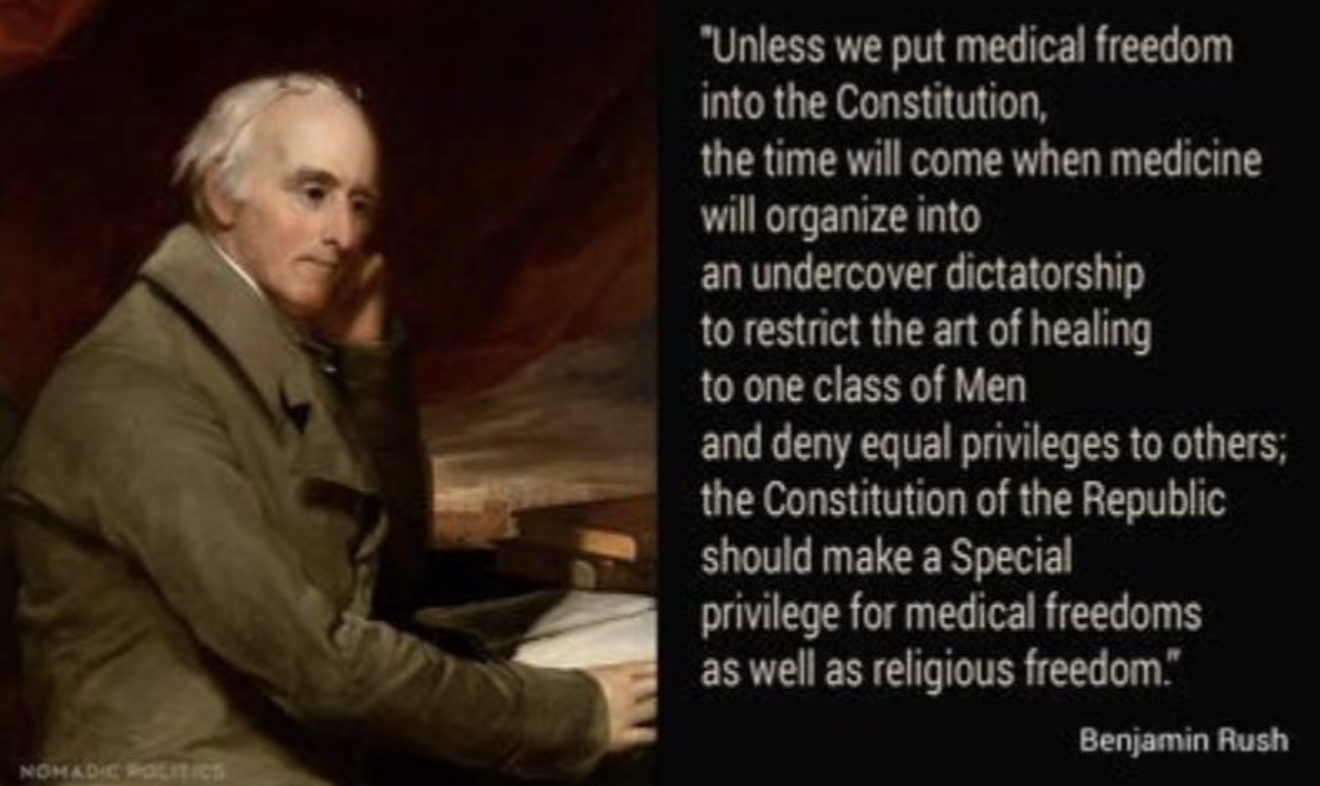
Founding Father Benjamin Rush
Several days ago I came across this quote and couldn’t help but to think how timely it is especially given that the Biden regime will be declaring the pandemic over-well on May 11th, for now. Benjamin Rush (1746-1813) was a contemporary of Thomas Jefferson, John Adams, Thomas Paine and Benjamin Franklin and a signer of the Declaration of Independence. He was a physician, educator, abolitionist and prolific writer.
The quote was taken from his introductory remarks to a course lecture at the University of Pennsylvania in 1801 wherein he described “causes which have retarded the progress of our science” and this was one of the 24 he listed. Further, he stated, “Conferring exclusive privileges upon bodies of physicians, and forbidding men of equal talents and knowledge, under severe penalties from practicing medicine within certain districts of cities and countries… such institutions, however sanctioned by ancient charters and names, are the Bastilles of our science.”
Rush became a member of staff at a Pennsylvania Hospital focusing on the care of the poor, social reform, and the humane treatment of mentally ill patients, even opening America’s first free dispensary (pharmacy) in 1786. Yet, while he was innovative in this aspect of his medical career, he was also a fervent advocate of “heroic” medicine, which claimed that bleeding and purging were some of the best treatments for any ailment. These controversial practices were quickly denounced and caused him to shift his focus from diseases to mental illness, being one of the first to delve into the study of psychiatry with his last publication “Medical Inquiries and Observations upon the Diseases of the Mind.” When Benjamin Rush died on April 19, 1813, he would become known as one of the greatest doctors of his time and the “father of American psychiatry.”
Throughout his life, Benjamin Rush was an outspoken man on a variety of topics ranging from social reform, slavery, temperance, the Constitution, independence, and more. While some of his beliefs proved to be controversial, such as his views on General Washington (which
ultimately caused his resignation from the militia) to the evils of slavery (despite owning a slave himself). A complex individual, Rush was an ardent supporter of individual and medical freedom and was certainly, like all of the founding fathers,
well ahead of his time.
JANUARY 2023 AMERICANISM
RESOLUTION in 2023!
As with every New Year, I am tempted to create new resolutions in my desire to be a better person than the year before. Mine are probably very similar to yours and last as long too (a bit of sarcasm here). Our founding fathers were keenly aware of the need to better themselves not only for the individual’s sake coupled with their devotion to God, but for the sake of a new republic that would be self-governed, one free from the tyranny of British rule.
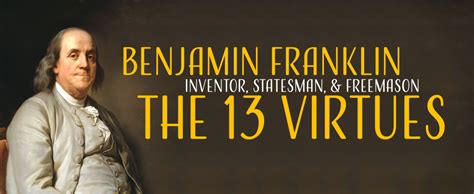
While I’ve met many terrific young people in their 20s I have to admit I don’t think very many of them have had the desire or even self-awareness that Ben Franklin had in his 20s when he decided to pursue a “bold and arduous project of arriving at moral perfection” through the enlistment of 13 virtues.
“I wish’d to live without committing any fault at any time; I would conquer all that either natural inclination, custom, or company might lead me into. As I knew, or thought I knew, what was right and wrong, I did not see why I might not always do the one and avoid the other. But I soon found I had undertaken a task of more difficulty than had imagined.”
Franklin even lists Resolution as a virtue without which none of the others are achievable. “Resolve to perform what you ought. Perform without fail what you resolve.” So determined to fulfill all these virtues, he even created a “little book” that he carried with him to track his success each day then each week for thirteen weeks, four times a year. Focusing each week on one of the virtues, a mark on a row during that week would indicate where he had fallen short.
The founding fathers were far from perfect and admitted it without hesitation. But they also knew there was value and goodness that would be achieved even in the mere act of trying to be better, in setting one’s standards higher. Otherwise, as Abigail Adams would write after seeing Parisian dancing girls flaunting their skirts well above their ankles, how easy it is to get used to a vice and make peace with it. There’s too much in our society today I can’t and won’t make peace with.
As I push the disappointments of 2022 into the rearview mirror, two virtues keep coming into focus as I look ahead to 2023-perseverance and resilience-which really is a more modern version Franklin’s RESOLUTION virtue. Both are challenging but when I look at what’s happening to our county, I am ready, willing and able! I hope you are too. It’s natural to want to stop trying or perhaps put forth less effort after so much hard work that went unrewarded. But how many defeats did the revolutionary patriots face during their many battles before independence was finally achieved? Washington’s army toward the end of the war was down to a mere 1,000 men after deserters and non reenlistments took a devastating toll.
Perseverance is the ability to keep doing something in spite of obstacles. People who persevere show steadfastness in doing something despite how hard it is or how long it takes to reach the goal. Perseverance — sometimes called “grit” — is the great leveler. As a party we need to look to new ways to persevere.
Resilience means to bounce back after setbacks and cope going forward. We need resiliency to persevere. It’s easy to get stuck in the past and stay there but it does no good. We need to learn from it and learn well. With resilience we can come up with new solutions to the complex problems we’re faced with.
“But on the whole, tho’ I never arrived at the perfection I had been so ambitious of obtaining, but fell far short of it, yet I was, by the endeavor, a better and a happier man than I otherwise should have been if I had not attempted it;…
” Benjamin Franklin
November Americanism
submitted by Nancy Osgood, Chair
“Elections, like presidents, come and go. And always, our nation remains-due primarily to the courage and sacrifice of America’s veterans who exemplify and defend the ideals that our United States stands for.” – Ronald Reagan
Although the peace treaty to end World War I was signed in June of 1919, the war itself ended in the previous November of 1918. The Treaty of Versailles officially ended the war between Axis and Allied nations, but it was on the 11th hour of the 11th day of the 11th month that hostilities truly ceased. President Woodrow Wilson proclaimed this day to be known as Armistice Day. Parades are often held and businesses are asked to give a brief pause at 11am to acknowledge this day.
Also to commemorate this day in 1921, an unidentified American soldier killed in the war was buried at Arlington National Cemetery near Washington, D.C. On the same day the previous year, unidentified soldiers were laid to rest at Westminster Abbey in London and at the Arc de Triomphe in Paris.
By 1926 Congress declared Armistice Day to be observed and by 1938 27 state legislatures made it a legal holiday. (Note: States have the power to decide for themselves whether or not to designate a holiday as their own since the Federal government is limited to only doing so for Federal employees and the District of Columbia, though states usually do follow the Feds.)
While World War I was to be “the war to end all wars” that was not to be. US participation in World War II (16 million+) and the Korean War (5.7 million+). In 1954 Congress amended the 1938 act and changed “Armistice” to “Veterans.” Veterans Day honors all American veterans-living or dead-but especially gives thanks to living veterans who served honorably during wartime and peace.
Allied Nations also commemorate this day on or near November 11th: Canada calls it Remembrance Day, Britain and Commonwealth countries honor Remembrance Sunday where they hold two minutes of silence at 11am on November 11th.
Also of significance this November 10th is the 247th birthday of the US Marine Corp-Happy Birthday!
This November 11th, please honor and say, “thank you” to all the veterans in your life. They’ve kept our country free and the most desired place to live on earth!

OCTOBER AMERICANISM
submitted by Nancy Osgood, Chair
INSPIRATIONAL WOMEN OF OUR DAY
Biography has always been my favorite reading genre but with the release of three autobiographies of famous Republican women so far this year, I just couldn’t resist. I must be turning into a true political junkie if I’m spending even my leisure time
reading about politics!
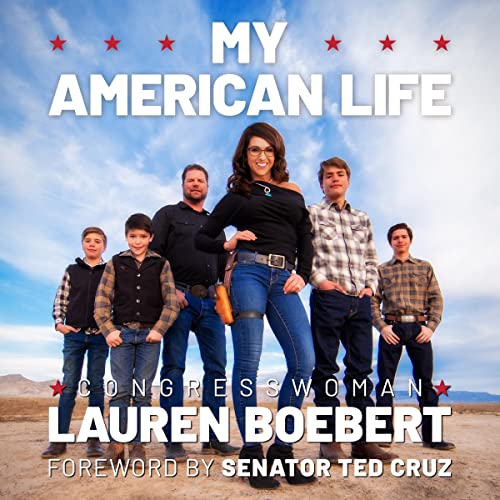
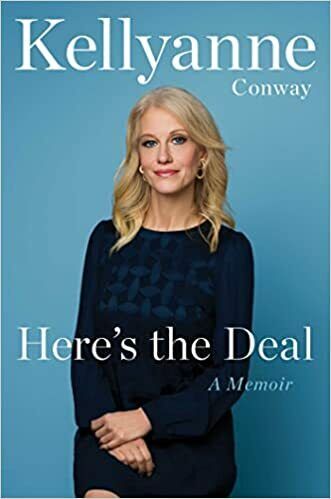
This summer I treated myself to Not My First Rodeo, by Gov. Kristi Noem of South Dakota, Here’s the Deal by Kellyanne Conway, former senior Trump campaign advisor and My American Life, by Colorado Congresswoman Lauren Boebert. These are three women who demonstrate unrelenting courage and mettle in their quest to fight for this country while having to wade through the often ugly and dirty world of politics. And did I mention raising their families at the same time? Between the three of them they have 11 children and three spouses-one of which
is truly a piece of work!
I don’t know which I appreciated more–Kellyanne’s raw honesty about a husband who so blatantly publicly humiliated her with his anti-Trump tweets to Lauren Boebert’s own admission about growing up so poor she didn’t always have feminine hygiene products when she needed them. And then there’s Kristi Noem, who, at the age of twenty-three and eight months pregnant, became the heir apparent to her father’s bustling ranch operations when he suddenly dies in a freak farm accident. Each of these women overcame hardships and heartbreaks by sticking
close to their faith and family.
This election season I am just in awe of the 135 female candidates running for office, some are governerships like our own Kari Lake in Arizona, Tudor Dixon of Michigan, Ashley Kalus of Rhode Island and Sarah Huckabee Sanders in Arkansas. Many others are running for congressional positions in the House and Senate while other are boldly vying for top education and lieutenant governor slots in their home states. Though I know I’ll never become a political figure/leader like any of these women, each of them has moved me to do more with every day that God gives me for this great country.
SEPTEMBER AMERICANISM
submitted by Nancy Osgood, Chair
The month of September marks many historic events in our American history but none other than September 17th 1787 and the birth of the US Constitution:
We the People of the United States, in Order to form a more perfect Union, establish Justice, insure domestic Tranquility, provide for the common defence, promote the general Welfare, and secure the Blessing of Liberty to ourselves and our Posterity, do ordain and establish the Constitution for the United States of America.
Although the colonies had won the war of independence in 1776, there was very little unity after that. States continued to hold onto their individual power, the central government had insufficient power to regulate commerce. It could not tax and was generally ineffective in developing any type of commercial policy across state boundaries. Nor could it effectively support a war effort. Congress was attempting to function with a depleted treasury; and paper money was flooding the country, creating extraordinary inflation. Anarchy was fast on the horizon as western Massachusetts farmers who were heavily in debt began to rebel against the harsh payment terms being made by the East Coast debt collectors and began to rebel. In what is known as Shays Rebellion this insurrection quickly led to the reality that the Articles of Confederation would not be adequate to address all the needs of this new fast growing and complex nation.
So in 1787 for four long hot months starting in May, 55 delegates from 12 states met in Philadelphia to try and craft a new framework of government-one that would keep the states unified. Known as the Constitutional Convention, founding fathers such as George Washington, James Madison and Alexander Hamilton needed to create a document that would go beyond the Articles of Confederation. On September 17 they finished, and the country and the world learned what they had produced—the Constitution of the United States, 4,500 words of collaborative genius.
How was this great document able to come into being? Many historians believe it was due to three significant factors:
1. The possibility of failure was too terrifying. What would happen to the states if a cohesive government could not be constructed?
2. It was the great leaders who were also men of the Enlightenment and saw politics as a kind of science that took on this enormous task. They studied what had worked in the past and what had failed. Europe especially had its share of experiments in governing.
3. But perhaps the most extraordinary feature of the Constitutional Convention is that they stuck it out. The delegates disagreed on almost everything. They disagreed on how power should be divided, they disagreed how senators and representatives should be chosen, how much power the executive should have and how much the court should have. And, most of all, they disagreed on slavery. Yet, on every issue—often after furious debates—they reached a compromise. The easy thing would have been to go home and denounce the entire project. A few did. But most didn’t. They knew they had to make this work. There was no good alternative.
Today, it is easy to become discouraged at the current state of the country-at the loss of morality, rule of law, respect for life and property, but we too must stick it out. Get involved! Don’t just complain and curse at the television or keyboard. TAKE ACTION. You’ll feel better! Join civic committees to make conservative values stronger than ever. Donate your time and/or money where you can. Write letters to the editors of any local newspapers. Attend school board meetings. It is and is making a difference. There are wins all around us-some big and some small: Roe v. Wade, the AZ “Free and Fair” elections initiative being struck down and off the November ballot, conservative school board candidates stepping up, Hispanic candidates across the country getting onto the ballot, to name just a few. We need to keep fighting the fight and just like our forefathers-stick it out. There are so many more of us than them and remember, “If God be for us, then who can be against us?” Romans 8:13

submitted by Nancy Osgood, Chair
“In the Good Ole Summertime”
… There’s a time each year
That we always hold dear
Good old summertime
With the birds and the trees’es
And sweet scented breezes
Good old summertime
When your day’s work is over
Then you are in clover
And life is one beautiful rhyme
No trouble annoying
Each one is enjoying
The good old summertime
-Words and music by Les Paul & Mary Ford, 1952
Having grown up in the East, summer break from school was mid-June to after Labor Day, and the month of August was the epitome of summer. There was always lots of swimming at Silver Lake, as well as the Hudson River (as polluted as it was!) backyard grilling, Yankee’s and Met’s baseball games and eating the most incredible Jersey corn, tomatoes and cucumbers imaginable. For me it’s always been the month of vacation, relaxation and fun. Maybe that’s why so much of what’s good about our country comes to mind in August-our beaches, boardwalks, National Parks, interstates,
arts and music to name just a few. Let’s Go!:
Beaches- Hawaii’s beaches are just second to none.
On August 21, 1959 this territory became the 50th state of the union. If you’ve ever read James Michener’s, Hawaii, you’ll remember that US missionaries pleaded with US officials for years to annex the islands (though not until 1898) quickly as they witnessed a heavy infiltration of the Japanese.
What a jewel these islands are!
More natural beauties reside in over 400 national parks across the US, District of Columbia, American Samoa, Guam, Puerto Rico, Saipan, and the Virgin Islands. covering 84 million acres! Check them out here https://www.nps.gov/findapark/index.htm In Arizona alone, there are 31 national sites or monuments under the auspices of the National Park Service or Bureau of Land Management. https://arizonajourney.org/arizona-national-parks-and-monuments/ The Grand Tetons remains on my bucket list!
Boardwalks- Having grown up just a couple of hours from Atlantic City with its great boardwalk, I am a bit nostalgic about these. After the big hotels and railroads were built along the beaches of Atlantic city, the problem of what to do with all that sand coming into the hotels needed a solution. In 1870 a train conductor and hotel owner came up with the idea to build a mile long boardwalk. It worked so well that within 10 years they built an even bigger one and soon they were popping up all over coastal cities. This is the only time I’ll ever mention CNN-I promise!
Here’s a list of some of the best America has to offer-https://www.cnn.com/travel/article/america-best-boardwalks/index.html.
And what would summer be without a road trip?? Gotta hit the highway and the most common way to get from one national park to the other is the Interstate. US highways were modeled after what then Army General Dwight D Eisenhower witnessed while commanding in Germany during World War II-the reichautobahnen or imperial highway. By 2020, there were close to 49,000 miles of interstate miles in the US. How many of you remember when I-10 stopped in Phoenix and drivers would have to reroute themselves along surface streets to pick it up again in the West Valley? It wasn’t until August 10, 1990 that the final section of I-10 was completed (the elevated Papago Freeway Tunnel) after decades of freeway revolt. And for the record, the cost of gasoline averaged $1.15 a gallon.
And while you’re driving down that endless highway, what better tunes to crank up than some jazz or rock n’ roll? One of the most influential jazz musicians was born on August 4, 1901. “Sachmo”, better known as Louis Armstrong, rocketed jazz into a serious art form. After being passed back and forth between his mother and father who were separated shortly after he was born, Sachmo at age 11, took up singing in the streets with other boys who sang for money. Shortly thereafter, he learned the trumpet and the rest is history. The month of August is also the 53rd anniversary of the infamous Woodstock Music Festival held on Max Yasgir’s dairy farm in Bethel, New York from August 15-18th. More than 400,000 hippies showed up to what was billed as “3 days of Peace & Music” after 186,000 tickets were bought in advance. Check out the movie, Three Days that Defined a Generation.”
I hope everyone is having a wonderful summer
in the best country on Earth!
“Seems to me, it ain’t the world that’s so bad but what we’re doin’ to it. And all I’m saying is, see, what a wonderful world it would be if only we’d give it a chance. Love baby, love.
That’s the secret…” Louis Armstrong

https://acrobat.adobe.com/link/review?uri=urn:aaid:scds:US:0c10b713-0b42-3fbb-892e-dfc1dfc90177
https://acrobat.adobe.com/link/review?uri=urn:aaid:scds:US:ff6bce75-78f6-3e80-a0af-2f9bd3da43c6
May 2022–Military Appreciation Month
https://acrobat.adobe.com/link/review?uri=urn:aaid:scds:US:a13ac989-3225-3ad0-bfd6-5185d9a21827
https://www.military.com/memorial-day/support-troops-and-families.html
https://avosba.org/avoba-membership/veteran-owned-businesses-by-state/
https://nvf.org/support-veterans-make-difference/
https://usowishbook.uso.org/
https://www.va.gov/phoenix-health-care/work-with-us/volunteer-or-donate/
“This will remain the land of the free so long as it is the home of the brave.” — Elmer Davis
“These fallen heroes represent the character of a nation who has a long history of patriotism and honor — and a nation who has fought many battles to keep our country free from threats of terror.” — Michael N. Castle
May 2013 –Red Skelton’s Pledge of Allegiance
January 2022–For Such A Time As This

February 2022–Happy Birthday Arizona


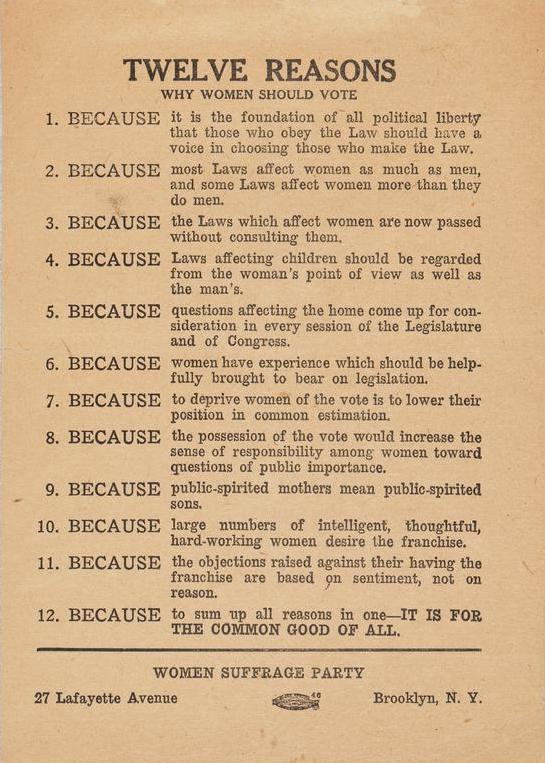
March 2022–Women’s History Month
April – Remembering our Judeo-Christian Heritage
https://acrobat.adobe.com/link/review?uri=urn:aaid:scds:US:71f2ce5a-c5d3-35d6-85f1-37ea9d59e233
References:
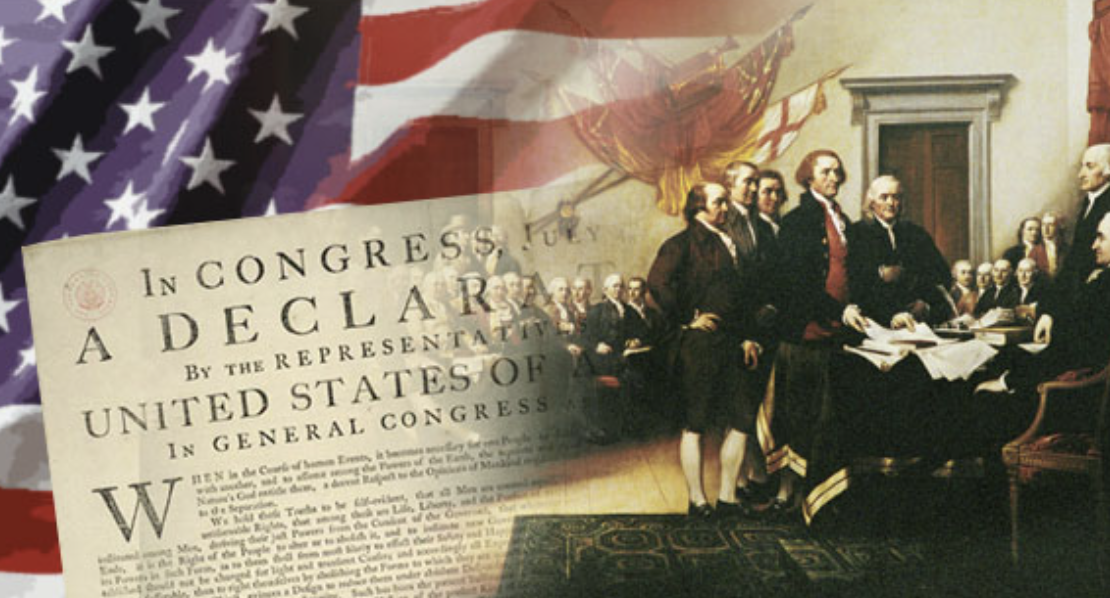
https://nccs.net/blogs/articles/judeo-christian-roots-of-americas-founding-ideals-and-documents
 Tempe Republican Women